
Rising home prices, limited supply, and stagnant wages are pushing housing out of reach for renters and buyers across the state
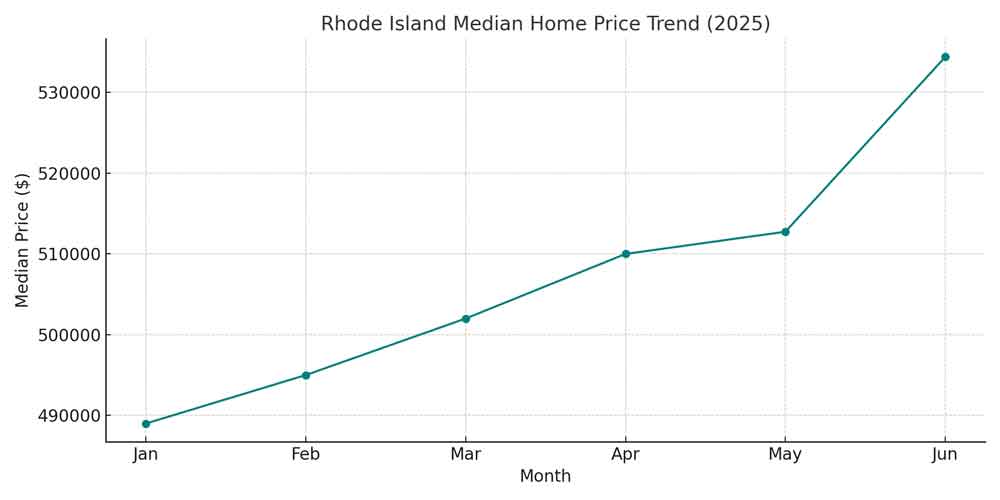
Housing has become one of the most significant issues facing Rhode Island today, and the data shows how serious the situation is.
Currently, the median price for a single-family home in Rhode Island is very high. Recent data reports show homes are selling anywhere between $425,000 and $505,000, and those prices keep going up year after year. The issue with the home prices increasing yearly is that people’s incomes are not rising at the same pace. That gap means buying a home is becoming increasingly out of reach for many Rhode Islanders, especially first-time buyers and young families.
Another major issue is the housing supply. Rhode Island has a severe shortage of homes on the market. Right now, if no new homes were built or listed, it would take just a little over two months for all the current homes on the market to sell. With just over two months of housing supply, Rhode Island is facing an unfortunate reality, as experts say a healthy housing market has five to six months of supply. This low inventory makes competition fierce and keeps prices high. Entry-level and starter homes are especially hard to find, with very few listings priced under $350,000. Sales trends are showing both ups and downs. There is some data that depicts overall home sales and listings have increased slightly compared to late 2024. Competition is intense. Homes are still selling quickly, and Rhode Island buyers often face bidding wars, pushing prices even higher.
These market conditions directly affect housing affordability for residents in Rhode Island. About 36.9 percent of households in the state are considered cost-burdened, meaning residents spend more than 30 percent of their income on housing. For renters earning the median income, affordable housing is hard to find as well. In many cases, rent takes up far more of a household’s income than what is considered financially healthy. The situation is even more difficult for renters with lower incomes. Rhode Island has a significant shortage of affordable rental units. There are only about 47 affordable rentals available for every 100 extremely low-income households. To put that into perspective, someone earning minimum wage would need to work roughly 78 hours a week just to afford a fair-market one-bedroom apartment. For most people, this is very unrealistic.
All of these factors are adding to growing housing instability and homelessness across the state. Even in years when overall homelessness numbers seem to level off, the number of people who are unsheltered or experiencing long-term homelessness continues to rise. Shelters and support services are stretched thin, and as housing costs keep rising faster than wages, more people are being left without stable options. On top of that, there are long-standing policies and developmental challenges. Construction delays, zoning limits, and regulatory barriers have slowed down new housing for years. Because of that, supply hasn’t been able to keep up with demand. There have been some steps forward. In 2024, affordable housing programs helped create 343 new deed-restricted homes, one of the highest numbers the state has seen in recent years. But even with that progress, it’s still nowhere near enough to meet the statewide need.
Looking ahead, one proposed policy aims to bring in more funding. A new tax on luxury second homes, sometimes referred to as the “Taylor Swift Tax”, is scheduled to take effect in mid-2026. The goal is to encourage owners to rent out vacant properties and generate revenue to support housing programs across the state.
When examined as a whole, the data paints a clear picture: Rhode Island’s housing crisis is driven by high prices, limited supply, and affordability challenges that affect renters and homeowners alike. While some steps are being taken, the gap between housing costs and what people can afford continues to grow.
Audio-Visual: JT Lawrence
Copy-Editing: Michelle Stiber
Research & Script Writing: Jacob Barber and Ashlyn Keating