
How child maltreatment, foster care, and poverty trends are shaping reform efforts across Rhode Island.
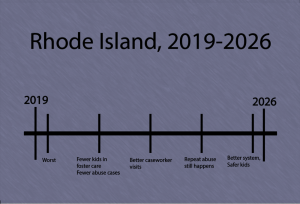
Rhode Island’s child welfare system is under review again as the state prepares its 2026 Child and Family Services Review (CFSR) action plan. More specifically, a federally guided effort to evaluate child protection, family support, and outcomes for children in care. The Child and Family Services Review uses specific performance indicators to measure how well states are protecting children from abuse and neglect. Additionally, the review focuses on supporting family stability and promoting permanency and well-being. The Rhode Island Department of Children, Youth & Families (DCYF) uses this data to shape policy and guide improvement plans.
Looking at recent Rhode Island data, we can see both encouraging trends and ongoing challenges. According to federal child welfare outcomes data, the total number of children reported as maltreatment victims in the state dropped from 3,183 in 2019 to 2,514 in 2023, even as the state’s child population remained relatively steady around 203,000-211,000 children. At the same time, the rate of children investigated for abuse or neglect has declined over the same period from 45.8 per 1,000 children in 2019 to 31.6 per 1,000 in 2023, suggesting fewer allegations overall or changes in reporting and investigation practices.
Rhode Island’s foster care system also shows measurable change: the number of children in foster care on September 30 each year dropped from 2,204 in 2019 to 1,747 in 2023. The foster care entry rate (the number of children entering care per 1,000 in the state) also declined over that period, indicating fewer new placements annually. At the same time, critical casework practices improved the percentage of children in care receiving monthly caseworker visits increased from 94.9% in 2019 to 98.1% in 2023, and in-home visits rose from 71.4% to 84.2%, suggesting more consistent oversight.
Safety metrics reveal areas that still need attention. Federal outcome data show that recurrence of maltreatment (children who experience more than one substantiated maltreatment event within 12 months) remained a concern, though improving slightly the share of children without recurrence rose from 89.6% in 2019-2020 to 91.8% in 2022–2023. Maltreatment within foster care itself also fluctuated: for example, 2.34% of children in foster care were maltreated in 2022, down to 1.97% in 2023, indicating some progress but highlighting that abuse in care remains a lived reality for some children.
These data trends matter because they link directly to policy priorities in the upcoming 2026 action plan. For example, reductions in foster care entries and consistent caseworker contact suggest that early intervention and family support strategies can work when adequately funded and implemented. At the same time, persistent rates of maltreatment recurrence and abuse in care highlight the ongoing need for preventive services and supports that keep families safely together, rather than pulling children into the system in the first place.
Broader child well-being indicators also contextualize these trends. According to the Annie E. Casey Foundation’s KIDS COUNT rankings, Rhode Island fell to 19th nationally in overall child well-being in the most recent report, with lower rankings in economic and health indicators compared to other states. This matters because economic insecurity and family stress are closely linked with child welfare involvement in research and practice. Data like child poverty rates, about 13.4% in 2023 help explain why early prevention and community investments are central to improvement plans.
As Rhode Island shapes its CFSR 2026 action plan, these measurable trends, fewer maltreatment victims, lower foster care entry rates, improved caseworker contact, yet lingering safety concerns, provide a roadmap for what works and what still needs improvement. A successful plan will not only set goals, but show how progress will be measured year by year, so policymakers, advocates, and families can see whether outcomes for children truly improve over time.
Audio-Visual: JT Lawrence
Copy-Editing: Michelle Stiber and Ashlyn Keating
Graphic Design: Haylee Silva
Research & Script Writing: Ashlyn Keating